Nina’s Years of Attic Punishment and Coercive Control
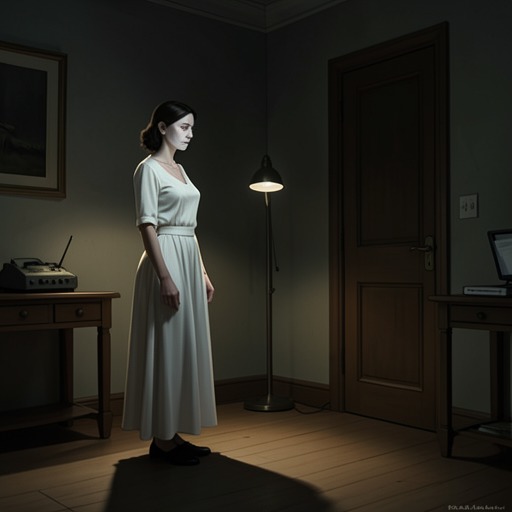
The HousemaidNina Winchester’s years of attic punishment are not a string of isolated episodes but a system Andrew Winchester uses to govern her choices, relationships, and efforts to leave. The threatened loss of Cecelia, Nina’s psychiatric history, and Andrew’s control of the household make the attic’s locked door only one part of her confinement: even outside it, Nina must anticipate punishment and weigh every attempt at freedom against what might happen to her daughter.
A recurring system of punishment
By the time Nina describes the pattern, she and Andrew have been married for seven years. To outsiders, he can appear almost ideal: he supports her financially, acts as a father figure to Cecelia, and is even-tempered and agreeable. That respectable domestic image sharply contrasts with Nina’s private knowledge of him and her hatred of him. The discrepancy helps explain why her account is so difficult to make credible to others, while the marriage’s financial security does not translate into freedom.
Andrew sends Nina to the attic on average once every other month, though the intervals vary. Once, six months passed without a punishment; at other times, the next trip comes sooner. Nina cannot prepare for a known date or know what alleged transgression will be used against her. She also cannot predict what punishment awaits in the room, or whether she will sleep in her own bed or on the uncomfortable cot. The uncertainty makes the punishment extend beyond the hours spent locked away: it places ordinary life under the pressure of an event whose timing and justification Andrew controls.
Nina tries several ways of changing the terms of the marriage. She offers to leave with Cecelia and only the clothes they are wearing, but Andrew laughs at the proposal. She attempts to behave as a perfect wife, cooking elaborate dinners, keeping the house spotless, and concealing her revulsion during sex, hoping not to give him a reason to send her upstairs. Compliance does not protect her; he still finds fault in conduct she could not have known was wrong. When appeasement proves ineffective, she switches to provoking him, snapping at him and abandoning the gym in hopes that either her behavior or her appearance will repel him. He does not seem deterred. After he catches her eating chocolate cake, he sends her to the attic and starves her for two days; afterward, he continues as before.
Cecelia as leverage
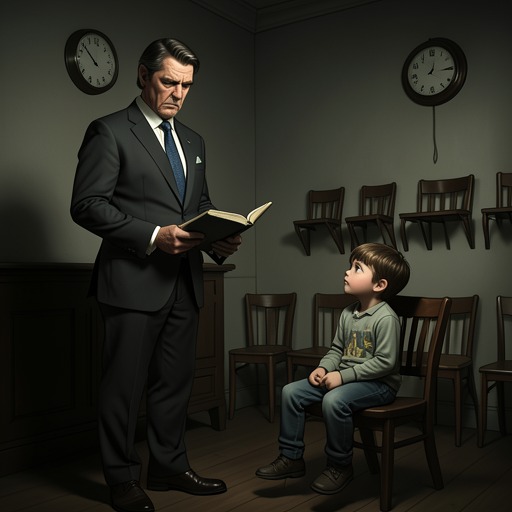
Andrew’s punishments reach Cecelia even when he does not directly punish her. If the child does something Andrew considers unacceptable, Nina is the one sent away. He buys Cecelia itchy, frilly dresses she dislikes and that other children mock. Cecelia learns that refusing to wear one or getting it dirty may mean her mother disappears for days, possibly without clothing. The dresses thus make a child’s ordinary choices part of the threat that disciplines Nina.
Nina fears Andrew may eventually punish Cecelia directly, but accepts punishment herself while she can keep it from falling on her daughter. Andrew reinforces that fear by threatening that Cecelia will pay if Nina tries to escape. He has already nearly drowned the girl. He also repeatedly replaces a jar of peanut butter Nina throws away, despite knowing Cecelia is allergic. The allergy causes welts rather than a life-threatening reaction, but Andrew sometimes slips peanut butter into Cecelia’s dinner and lets the rash appear after the meal, making the child’s discomfort a demonstration of his power. Nina’s wish to escape is therefore bound to a calculation about her daughter’s safety, not simply her own prospects.
Escape attempts and social isolation
Nina considers killing Andrew, but believes a murder conviction would keep her from protecting Cecelia. Andrew has prepared for the possibility that she might arrange or commit his death: he tells her that, if he dies for any reason, his attorney will send the police a letter describing her unstable behavior and homicidal threats. Her psychiatric history would, in his view, reinforce that account. Nina therefore stays and does not kill him, while imagining escape only for a time when Cecelia is older and no longer needs her. She is prepared to face consequences herself once her daughter is safe.
Seeking help also fails. Nina looks for Kathleen Connors, Andrew’s former fiancée, hoping another person who might support her account could make a police report possible. She knows Kathleen’s approximate age and appearance but cannot identify her among the many people with that name and eventually gives up. Her failed search leaves her without the witness she hoped might make her history believable.
Andrew also reaches into Nina’s friendships. Whenever she becomes close to someone new, he tells that person about her mental-health history and what she attempted years earlier, then asks to be contacted if she seems to be having another episode. Nina confides everything to Suzanne after the two have had too much to drink. Suzanne holds her hand, promises to help, and sends Nina home believing they will work out how to go to the police. But Suzanne briefly leaves the conversation and calls Andrew, warning him that Nina is having delusions. Andrew is waiting when Nina returns home.
The consequence is another two-month stay at Clearview Psychiatric Hospital. There, Nina discovers that at least one director is a golfing friend of Andrew’s father. After her release, Suzanne apologizes and says she had been worried; Nina forgives her, believing Suzanne was manipulated as she was. Their friendship, however, never returns to what it had been, and Nina says she cannot trust anyone again. The episode turns a possible source of help into another route through which Andrew can have her discredited and confined.
The house as a prison
The physical design of the house makes Nina’s powerlessness explicit. After hours of pounding on the attic door, scraping the wood until splinters lodge beneath her fingernails, and screaming until she loses her voice, she gives up hope that neighbors will hear. Andrew tells her that the space below the attic is soundproofed: even a dinner party downstairs would not hear her. Her cries cannot reach the people whose intervention might matter.
Surveillance extends that control into the attic itself. When Andrew reveals that he can see Nina, she searches the walls for a camera. He says it is well hidden and that he has been watching her only for the past few weeks, not throughout her entire stay. When she demands release, he calmly tells her she is not in a position to make demands. The hidden camera turns the room from a place of confinement into one of observation, while his composed response asserts that even the terms of Nina’s protest belong to him.
The image of the enclosing home changes with Nina’s understanding of it. Returning from lunch with Suzanne, she sees the gates that once seemed charming as what they are: the boundary of a prison. Across the marriage, Andrew’s apparent respectability, the threat to Cecelia, control over Nina’s psychiatric reputation, betrayal by a trusted friend, unpredictable attic sentences, and hidden surveillance reinforce one another. Nina’s account makes the decisive point through their cumulative effect: escape is obstructed not only by a locked door, but by the shrinking number of people and choices she can safely rely on.